
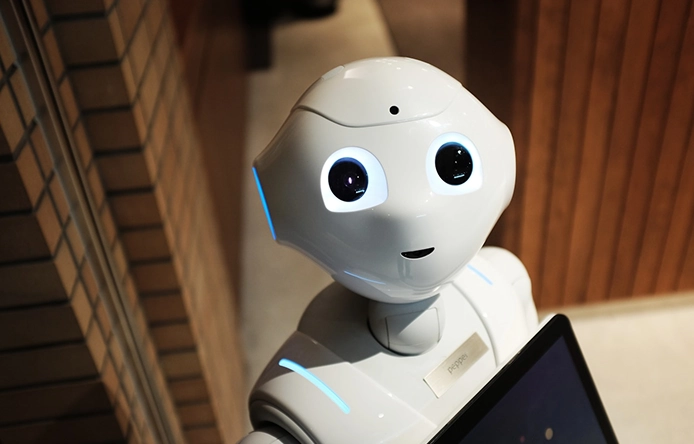
Artificial Intelligence is a fast-growing field that is currently changing our world, from the digital assistants on our smartphones to the algorithms controlling self-driving cars. While the depiction of AI in science fiction often involves human-like robots, its real-world applications have a wide range and are more subtle, with everything from Google’s search algorithms to even sophisticated automated weaponry being manifestations of it.
With AI increasingly becoming part of our lives, it is important to understand what it is and how it works, and why its development needs consideration.
The Two Faces of AI: Narrow and General
The AI interacting with us today is called Narrow AI or Weak AI. It is basically designed and trained for performing one single task. Though it sounds quite limiting, Narrow AI is already able to outperform humans in many fields, such as playing complex games, like chess, identifying faces, or even solving intricate equations.
On the other hand, the ultimate goal for most researchers in this field would be the development of Artificial General Intelligence, more commonly referred to as Strong AI. While its narrow counterpart is specially designed for one task, an AGI can understand, learn, and apply its intelligence to solve any problem, much like a human being. An AGI could potentially outperform humans in virtually every cognitive task.
AI Is Already Here
Many of us use AI every day, never even realizing it. Simple actions such as searching the internet, scrolling through a social media feed, or getting a product recommendation are all powered by complex AI systems. Because the technology operates so seamlessly in the background, we often don’t recognize it as AI. Instead of being afraid of it, it’s more constructive to know its capabilities and what it can do, considering how our future will be closely entwined with artificial intelligence.
Why We Must Prioritize AI Safety
The more powerful AI we develop, the more important it will be that we can be confident it is safe. Having a laptop crash or an account hacked is inconvenient and irritating; the consequences of an AI system malfunctioning are likely to be much more serious. When an AI system controls a self-driving car, a power grid, a pacemaker, or an automated financial trading system, for example, it is crucially important that it performs its task exactly as specified.
But the deeper long-term safety question is: What if we succeed in building AGI significantly more intelligent than humans in all domains? Since designing even more intelligent systems is itself a cognitive task, a superintelligence could start an intelligence explosion: a rapid, recursive self-improvement cycle. The outcome would be the development of a Superintelligence greatly surpassing the human mind. Whereas such a creation could help solve mankind’s most pressing problems, such as war, disease, and poverty, it also poses monumental risks to be managed.
The Great Debates and Challenges of AI
The future of artificial intelligence is a topic of heated debate among experts and the general public. The key questions remain unanswered: What is the impact of AI on the future job market? Will we ever develop a real, human-equivalent AGI, and if so, when? Should we welcome the prospect of an intelligence explosion, or should we fear it? Apart from these philosophical debates, businesses today face practical challenges in adopting AI: finding skilled personnel, acquiring necessary data to train AI models, and aligning AI initiatives with core business strategies are usually the most significant hurdles.