
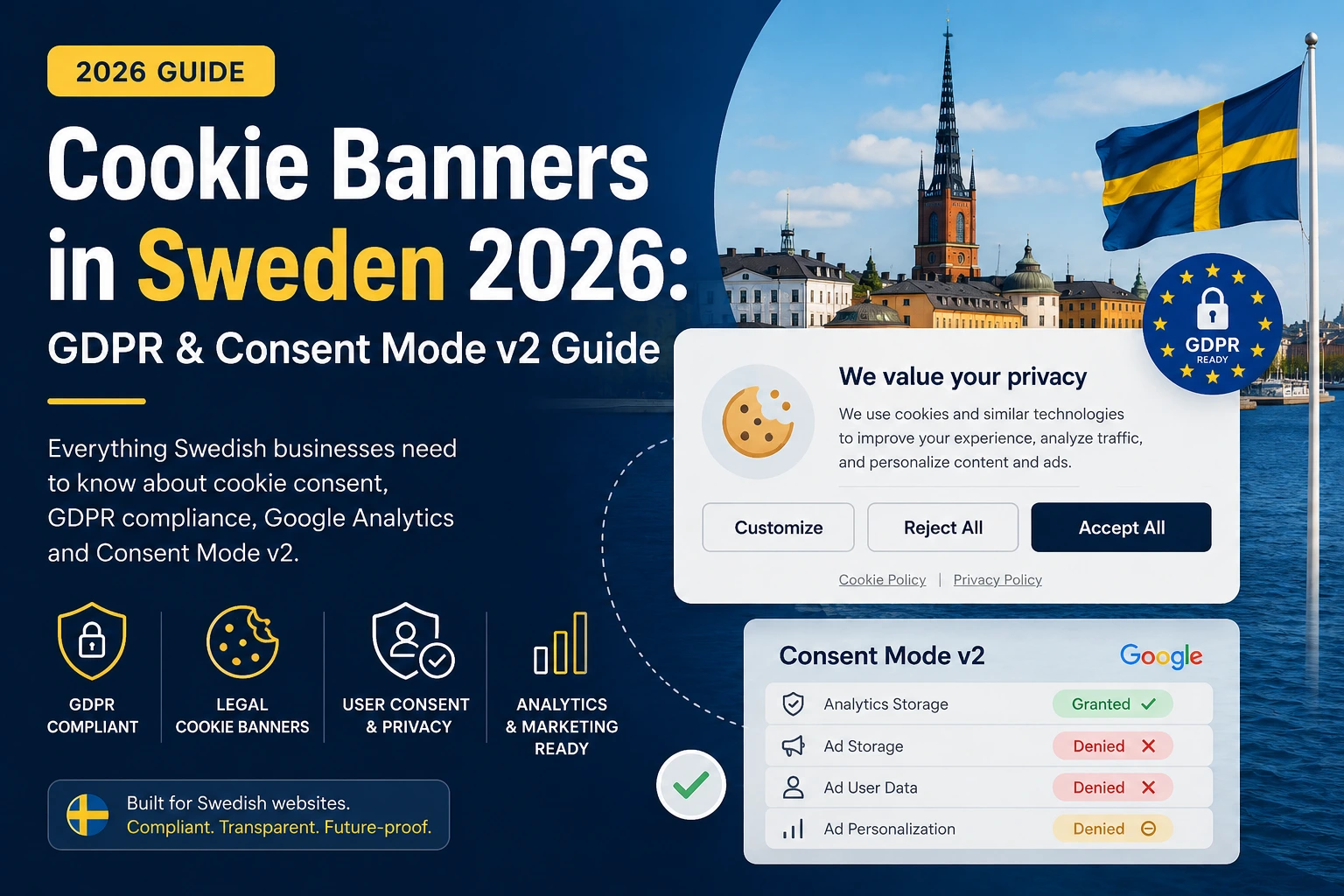
For many years, cookie banners were treated as a small technical detail on websites. A simple popup with an “Accept” button was often considered enough. But things have changed quickly in Sweden and across Europe.
Today, cookies, tracking, analytics, and user consent have become serious compliance topics. Businesses are facing stricter privacy expectations from users, increasing regulatory attention, and major changes in how platforms like Google handle data collection.
At the center of these changes are three important topics:
- GDPR
- Swedish IMY guidelines
- Google Consent Mode v2
For many companies, this has created confusion.
What makes a cookie banner legal in Sweden?
Can businesses still use Google Analytics?
What is Consent Mode v2?
And what actually happens if a website collects data incorrectly?
Here’s a practical guide for Swedish businesses trying to understand cookie compliance in 2026.
Why Cookie Consent Has Become More Important
When GDPR first arrived, many businesses added cookie banners quickly without thinking much about long-term compliance. Some copied banners from other websites. Others installed plugins without understanding what data was actually being collected.
But privacy rules have evolved significantly since then.
Today, regulators expect websites to provide:
- clearer consent options
- transparent data collection
- user control over tracking
- proper documentation of consent
- easy ways to withdraw consent
At the same time, users have become far more aware of digital privacy. People increasingly expect websites to explain what information is being collected and why.
For businesses, this means cookie consent is no longer just a legal checkbox. It directly affects:
- trust
- brand credibility
- analytics quality
- advertising performance
- data compliance
What Does Swedish IMY Say About Cookies?
In Sweden, the authority responsible for privacy and data protection is IMY (Integritetsskyddsmyndigheten).
IMY follows both GDPR and the Swedish Electronic Communications Act, which together regulate how cookies and tracking technologies can be used.
In practice, this means websites usually need valid consent before placing non-essential cookies on a visitor’s device.
Examples of cookies that often require consent include:
- analytics cookies
- marketing cookies
- retargeting pixels
- advertising trackers
- third-party embedded tracking
Essential cookies that are necessary for the website to function may not require the same level of consent.
One important detail many businesses miss is that consent must be:
- informed
- voluntary
- specific
- easy to reject
- easy to withdraw
A banner that only offers an “Accept” button without a clear rejection option may no longer be considered compliant.
What Makes a Cookie Banner Legal in Sweden?
A legally compliant cookie banner is not only about design — it is about how consent is collected and managed.
A proper cookie banner should:
- explain what cookies are used for
- separate essential and non-essential cookies
- allow users to reject tracking
- avoid pre-selected consent boxes
- provide access to privacy settings later
- clearly explain third-party tracking
Many websites still use banners that:
- automatically load analytics before consent
- hide rejection buttons
- use confusing wording
- make rejection harder than acceptance
These patterns are increasingly viewed as problematic under European privacy expectations.
A good cookie setup should feel transparent and respectful rather than manipulative.
What Is Consent Mode v2?
One of the biggest recent changes for businesses using Google services is Consent Mode v2.
Google introduced this update because of growing privacy regulations in Europe. Businesses using Google Ads, Google Analytics, remarketing, and conversion tracking now need stronger consent handling mechanisms.
Consent Mode v2 helps websites communicate user consent preferences to Google services.
In simple terms, it tells Google:
- whether analytics consent was granted
- whether advertising consent was granted
- whether data can be used for personalization
- how tracking should behave if consent is denied
Without proper implementation, businesses may experience:
- reduced advertising functionality
- incomplete analytics data
- audience tracking limitations
- compliance risks
For companies relying on Google Ads or analytics, Consent Mode v2 is becoming increasingly important in 2026.
Can Businesses Still Use Google Analytics?
Yes — but implementation matters more than ever.
Google Analytics itself is not automatically illegal. The problem is usually how tracking is configured and whether valid consent is collected before data processing begins.
Businesses should ensure:
- analytics only activate after consent
- IP anonymization is configured properly
- unnecessary data collection is minimized
- users are informed about tracking
- consent records are maintained
Many companies unknowingly collect analytics data before users accept cookies, which can create compliance issues.
This is especially common when websites use:
- outdated plugins
- poorly configured tag managers
- hardcoded scripts
- third-party themes
Common Cookie Compliance Mistakes
Many Swedish websites still contain privacy and consent issues without realizing it.
Some of the most common mistakes include:
Tracking Starts Before Consent
Analytics and marketing scripts load immediately when the page opens.
No Real Rejection Option
The banner offers “Accept” but hides or complicates rejection.
Poor Consent Documentation
Businesses cannot prove when or how consent was collected.
Unclear Language
Cookie explanations are too technical or vague.
Third-Party Scripts Are Not Managed Properly
Embedded videos, chat widgets, and external integrations often load trackers automatically.
Consent Settings Are Difficult to Change
Users cannot easily update or withdraw consent later.
These issues are common even on professionally designed websites.
Why Cookie Compliance Also Affects Marketing
Many businesses worry that stricter consent requirements will destroy analytics and advertising performance.
In reality, poor implementation often creates bigger problems.
When cookie systems are configured incorrectly:
- analytics become unreliable
- conversion tracking breaks
- remarketing audiences shrink
- ad platforms lose data quality
A proper Consent Mode v2 implementation helps businesses maintain better measurement while respecting privacy requirements.
Good privacy practices also strengthen customer trust — especially in markets like Sweden where transparency matters strongly.
What Businesses Should Do in 2026
For companies unsure about their current setup, the best approach is usually to start with a cookie and privacy review.
A proper review should examine:
- cookie banner design
- Consent Mode v2 setup
- Google Tag Manager configuration
- analytics loading behavior
- third-party scripts
- GDPR compliance risks
- consent logging
After the review, businesses can identify:
- compliance gaps
- unnecessary trackers
- broken consent flows
- analytics problems
- opportunities to improve transparency
For many companies, small adjustments can significantly improve both compliance and data quality.
Privacy and User Experience Are Becoming Connected
One important shift happening in modern web development is that privacy and UX are no longer separate topics.
Users increasingly notice when websites:
- feel trustworthy
- explain data usage clearly
- respect privacy choices
- avoid aggressive tracking behavior
A clean and transparent cookie experience creates a better first impression than a confusing popup filled with dark patterns and technical jargon.
In Sweden especially, trust plays a major role in digital experiences.
Businesses that handle consent clearly and responsibly are often seen as more professional and credible.
Cookie Compliance Is No Longer Optional
In 2026, cookie management is no longer just a technical detail hidden in the footer of a website.
It has become part of:
- compliance
- digital trust
- analytics strategy
- advertising performance
- user experience
For Swedish businesses, the goal should not simply be adding another cookie popup.
The goal should be building a website that respects privacy while still supporting smart analytics and marketing decisions.
And for many companies, that process starts with understanding whether their current cookie setup is actually compliant.